
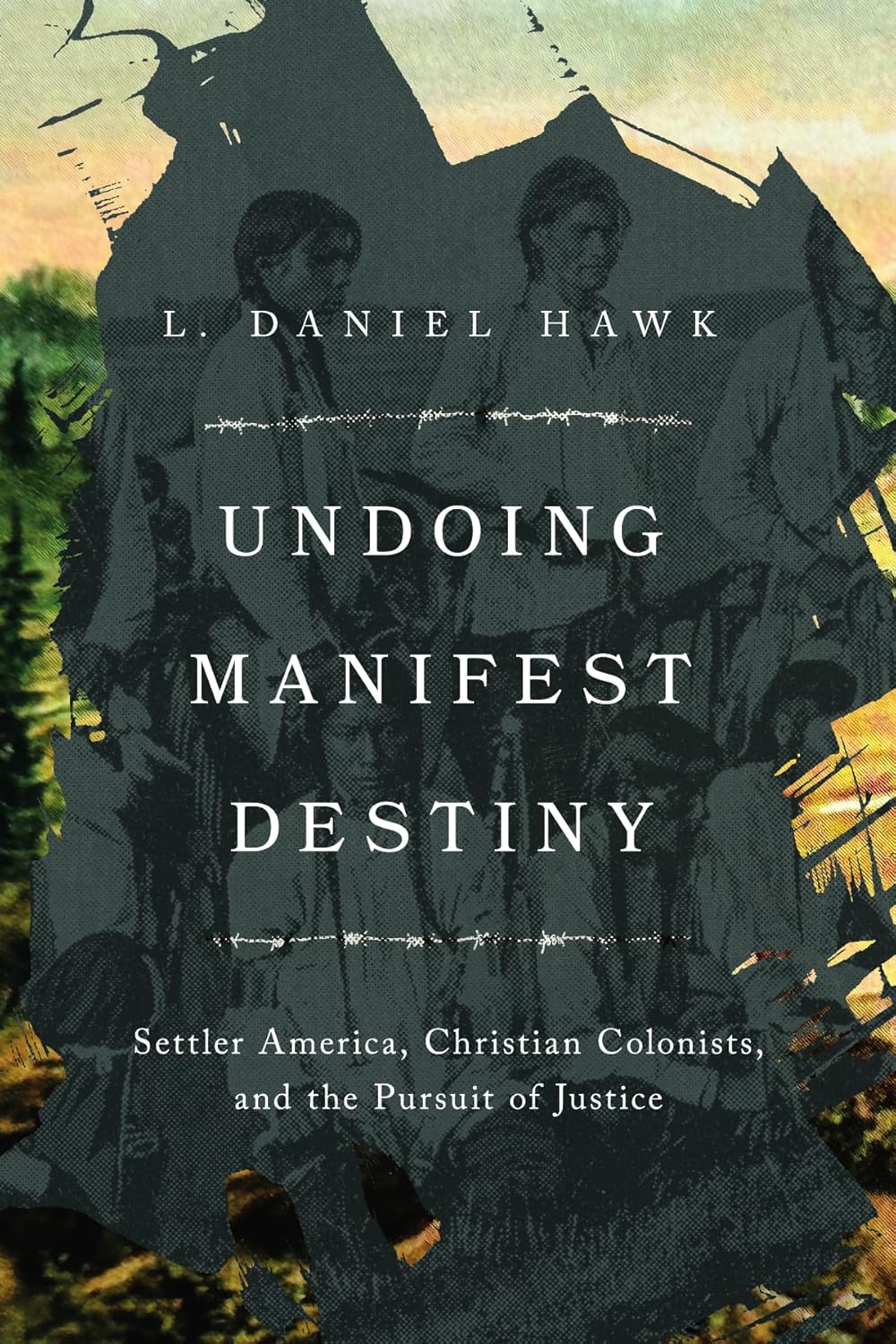
I recently read L. Daniel Hawk’s latest book Undoing Manifest Destiny and several people seemed interested in my evaluation of it, so here it is. At its core this is a book designed to help Christians put their faith into practice. Dan does this by providing a real world illustration of how theology has been used in the past to create injustice and how we can recognize fact that and work to undo the harm. The example Dan uses is how Americans treated (and continue to treat) Native Americans. The primary thesis of the book is that real harm was done to Native tribes and that Christians were complicit in this harm because of how they constructed and lived out their theology. To truly heal Christians need to understand the harm that was done, accept how theology was abused to cause harm, and then work to both remove that theology from their practice and to take active steps to reconciliation with those who were harmed.
The first six chapters of the book deal with the past. Each of these chapters details how Americans related to Native peoples during the time of American expansion (1600’s-1800’s). None of these are exhuastive histories but there are numerous citations. Further, Hawk continuously exhorts the reader to do more research about their own local area And this is one of the elements I liked most about the book, Dan spends much of his time focused on his home in Ohio. He, as much as possible, localized the history to how it impacted his area. He talks about the broad scope of US history but mostly through the lens of his locality. Not only is this enlightening to see the impact of national events on a local scale, it helps you to see how he has embodied the process that he endorses.
Reading the history of interactions between the United States and Native tribes is one thing but there are probably other books I would recommend for that (and I’m sure Dan would agree). The reason Christians should read this book is for the last third. One thing about Hawk’s focus in the book that is unique from other histories is that he highlights Christian theology’s role in the story. American policy was not primarily dictated by Christian theology and other histories make that clear, but theology certainly did impact cultural assumptions during America’s development and so Hawk’s critique has a place. And it is in the final third of the book where he lays out the American cultural mythology that we see the rationale. While there were certainly times when theology explicitly pushed policy the major issue is that American Christians did not push back against the developing cultural myth and instead reinforced it.
I can already anticipate the push back that some will give to the book. First, people will wrongly claim that Dan provides a one-sided history not elaborating the atrocities committed by natives against settlers. Why? Because these individuals are falling back on their junior high history classes where teachers provided an artificially glorified picture of US history, which is reinforced by some politicians calling the true history “revisionist”. The reality is that Hawk presents an honest picture of US history and there were points that I felt like he did not tell the story as graphically as he could have. He did not downplay the American abuses but he certainly was not as harsh as other historians I have read. And since I know that many will have that mythic picture of American history in their mind when they start this book, I encourage you to listen. I have wrestled with these truths for the last two decades since I first truly studied American History and it can be difficult but this is the real history of America.
The second area of push back will come at chapter seven, which I feel is the most useful chapter in the book. This chapter is all about “myths” and how they have been used. It is important to understand that “myth” does not mean “false story” (though a myth can be false). Myths are stories we tell ourselves to help make sense of the world we live in. Myths are also usually subconscious and rarely analyzed. Meaning that no matter who you are you need to take the time to stop and think about the myths that are presented in this chapter and how they impact you, because they have.But I think that many who read this chapter will be tempted to say “those were the past they don’t impact me today” or “that sounds like_____ but I respect natives”. In other words I think the easy thing to do would be to say “this doesn’t apply to me”. But the reality is these myths do apply to us because they are simply part of the culture we have inherited and we need to wrestle with how they have impacted us. I found this chapter to be the most helpful because I liked how Hawk clearly laid out the differing myths that weave through our society AND how they intertwine. He shows that our civilization is complicated and there are no easy answers. Rather, he presents a path of being aware of how culture has impacted me and impacted others. And being aware of this path is the first step toward healing.
Now, I do believe that chapter 7 is the most necessary chapter in the book and chapter 9 is useful because it ties the history to the present reality of American life with practical steps to change. But this book is written to and for Christians and if a book with that target audience is going to be effective then backing up what is said with the Bible is helpful. And this is chapter 8. For anyone who does not know, Dan is one of the world’s leading experts on the books of Joshua, Judges, and Ruth. Chapter 8 is a brief summary of the book of Joshua and how it specifically relates to America’s treatment of Native tribes. I know many people will have a knee jerk reaction that Joshua’s story is about conquest and genocide, “so how could it possibly help us undo the harm of American policy?” Great question there are about 25 pages answering exactly that. And trust me Dan”s exegesis of Joshua is thorough and pays closer attention to the text than probably anyone else you have ever encountered.
Obviously, I am encouraging Christians to read this book. And as you do spend serious time reflecting and responding to the questions at the end of each chapter. Dan is not looking for everyone to strictly follow him, nor even to agree with him at every point, but to have serious conversation about the facts laid out in the book and to think through how we relate to American culture. This is an easy read in terms of the language and style used, Dan is a gifted communicator and I think most people find his prose enjoyable. However, be warned this book does make you think and and grow in ways you may not expect.
 Squinting in the Light
Leave a comment