Like so many I grew up with C.S. Lewis’ Chronicles of Narnia. I hope that you also had this wonderful childhood experience, and I hope that you, like me, have not grown out of them. I use my own kids as an excuse to return to those books every year but in reality I am finally old enough to read fairy tales again. Today, as I was working on another project I began to think about the scene in The Magician’s Nephew where Aslan creates Narnia. I started to think about how in the book Aslan never creates humanity, rather humans are imported from another reality. Instead, Narnia is a land of mythology. Now, this is not the first time I have meditated on this reality and if you have read the books you likely have thought about it also. But the point is that for Lewis all mythology was grounded in the what he saw as the “true myth”, a line that he used in his essay on how Jesus relates to mythologies.
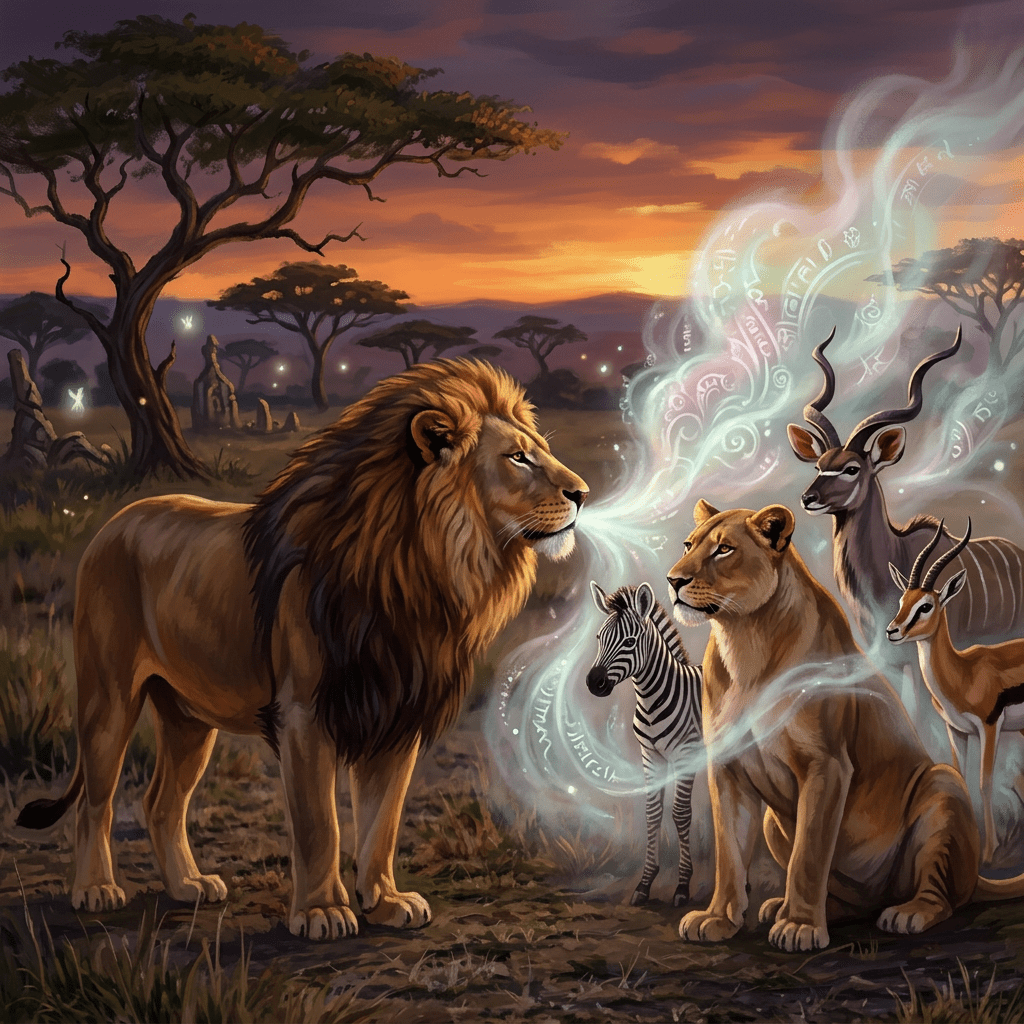
But as I thought about this it struck me that Lewis also accepted evolution as the biological explanation for life on Earth. And I then I thought about how fun it is that he mythologizes that concept in the scene of Aslan breathing on common beasts to make give them his living Spirit (they became talking beasts). In this story Lewis is demonstrating a picture of God giving spiritual life to the dumb beast that had been a previous creation.
What I find interesting about this is Lewis is explicitly doing what we all do implicitly, creating a story out of the facts we encounter on a daily basis. Lewis was creating a myth in the most genuine sense of the term. He took all of the components of reality that he accepted and wove them together to create a story. In his case it was an explicitly fictionalized story. However, this fiction still has a way of touching our reality. When I meditate on the deeper levels of the fiction, I find at the core the concept that humanity needs to subjugate all stories to God’s creative story. Not in the sense of literalists will say– that we need to read Genesis in a very plain way then conform all data to that reading. Rather, we need to consider all the stories we tell ourselves, the stories of history– general and personal, the stories of science and nature, the stories human interaction from the perspective that God has created us from a song and wants all creation to harmonize with that song.
The point Lewis came back to again and again in his stories is this, no matter how important the the discovery we make about this world it fits into the song God is already singing, and is important precisely because it fits that song. When we tell the story of the world we are creating a myth (hopefully a true one) and it is in that story we find meaning. So no matter what we learn about this world it is important that we focus on how that truth fits into the song God sings and the story we tell ourself.


Leave a Reply