
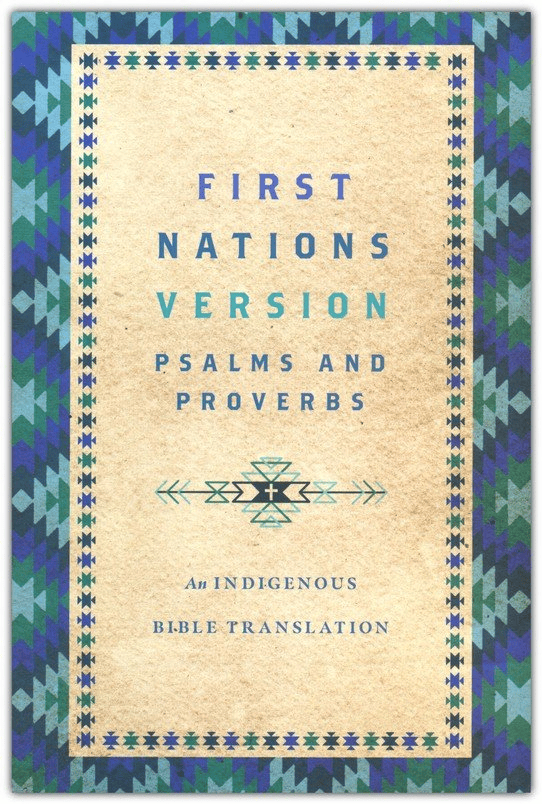
I was so pleased to see The first Nations Version (FNV) of Psalms and Proverbs released this summer. I read the First Nations Version New Testament when it debuted and genuinely appreciated the unique feel of the translation. The FNV is designed for natives to read the Bible not only in English but in a translation that is more culturally comfortable than many English translations. In an academic setting this translation would be tagged as a dynamic equivalence approach, but being academic seems wrong for this translation. But the FNV does not come off as being an academic translation so using such language feels out of place. Instead, I think I should approach it on its own terms. At its core this translation is meant to be meditative and devotional. The FNV uses language that connects the reader to creation and helps emphasizes how near God is and how intimately connected all parts of life are.
Knowing this is the strength of the FNV, I was very excited to read the Psalms and Proverbs. These books of the Bible lend themselves to what the FNV already does well. Both books are immersed in creation and focus on wisdom and devotion. Both of these books help us the most when we slow down to meditate on the wisdom they possess. And I find that the FNV helps me do this. I find that because the FNV is focused on bringing the Bible into a culture rather than a language, it leads to unique translations that force me to slow down and meditate on the words more than many other English translations do. An example of this is how when the Psalms speak of worship, the FNV will often talk of dancing, or instead of leaving Selah untranslated as so many English versions do it uses “honor beat on the drum”. These elements are not a part of my culture for worship but even I was able to understand them and these changes made me think more about what the Bible was trying to teach me. Perhaps some readers may need to spend some time understanding Native American Christianity to appreciate such elements, but it is worth the investment. I can imagine some comparing the FNV to their favorite translation and not appreciating it because it is different, less literal, or simply not what they expect from a Bible. No, translation is perfect and there were times I did find myself questioning a word choice, but those times were not often. But one of the advantages of hearing the Bible in my native language but a different culture helped me question where my own culture gets in the way of appreciating Scripture.
I also think it was beneficial for me to listen to the translation read, rather than read it myself. I do not have a great deal of experience listening to native American storytellers but I do have some. I found listening to the text read put me in mind of such storytellers and often I found myself becoming more immersed in the message because of this presentation. There were also many times I found myself repeating chapters multiple times allowing me to fully appreciate where the translation was taking me. I found myself wanting to hear the Psalms preformed in a worship service with the drums. And when I listened to Proverbs I found myself wanting to hear the storyteller take me on a journey from the Proverb to teach me wisdom.
Overall, this translation is definitely one most people would benefit from reading even if they are not within the target audience of Native Americans. As you consider approaching the translation take the time to appreciate the beauty of the language and unique approach of the translators. I do not think you will be disappointed.


Leave a Reply