
Scripture: Philippians 2:1–13
If, then, there is any comfort in Christ, any consolation from love, any partnership in the Spirit, any tender affection and sympathy, 2 make my joy complete: be of the same mind, having the same love, being in full accord and of one mind. 3 Do nothing from selfish ambition or empty conceit, but in humility regard others as better than yourselves. 4 Let each of you look not to your own interests but to the interests of others. 5 Let the same mind be in you that was in Christ Jesus,
6 who, though he existed in the form of God,
did not regard equality with God
as something to be grasped,
7 but emptied himself,
taking the form of a slave,
assuming human likeness.
And being found in appearance as a human,
8 he humbled himself
and became obedient to the point of death—
even death on a cross.
9 Therefore God exalted him even more highly
and gave him the name
that is above every other name,
10 so that at the name given to Jesus
every knee should bend,
in heaven and on earth and under the earth,
11 and every tongue should confess
that Jesus Christ is Lord,
to the glory of God the Father.
12 Therefore, my beloved, just as you have always obeyed me, not only in my presence but much more now in my absence, work on your own salvation with fear and trembling, 13 for it is God who is at work in you, enabling you both to will and to work for his good pleasure.
Questions
- What does it mean to be of the same mind and the same love?
Background
Related Scriptures: Isaiah 53:2-3; John 15:12-18,
Marius Victorinus: Remember that God is one, his Son is one and his Holy Spirit is one, and all three are one. If so, then we too ought to be one in our thoughts, so as to “be of the same mind” with the one God. Then it follows that we are to “have the same love.” To be of the same mind pertains to knowledge, while to have the same love pertains to discipline, to the conduct of life.[1]
Reflection
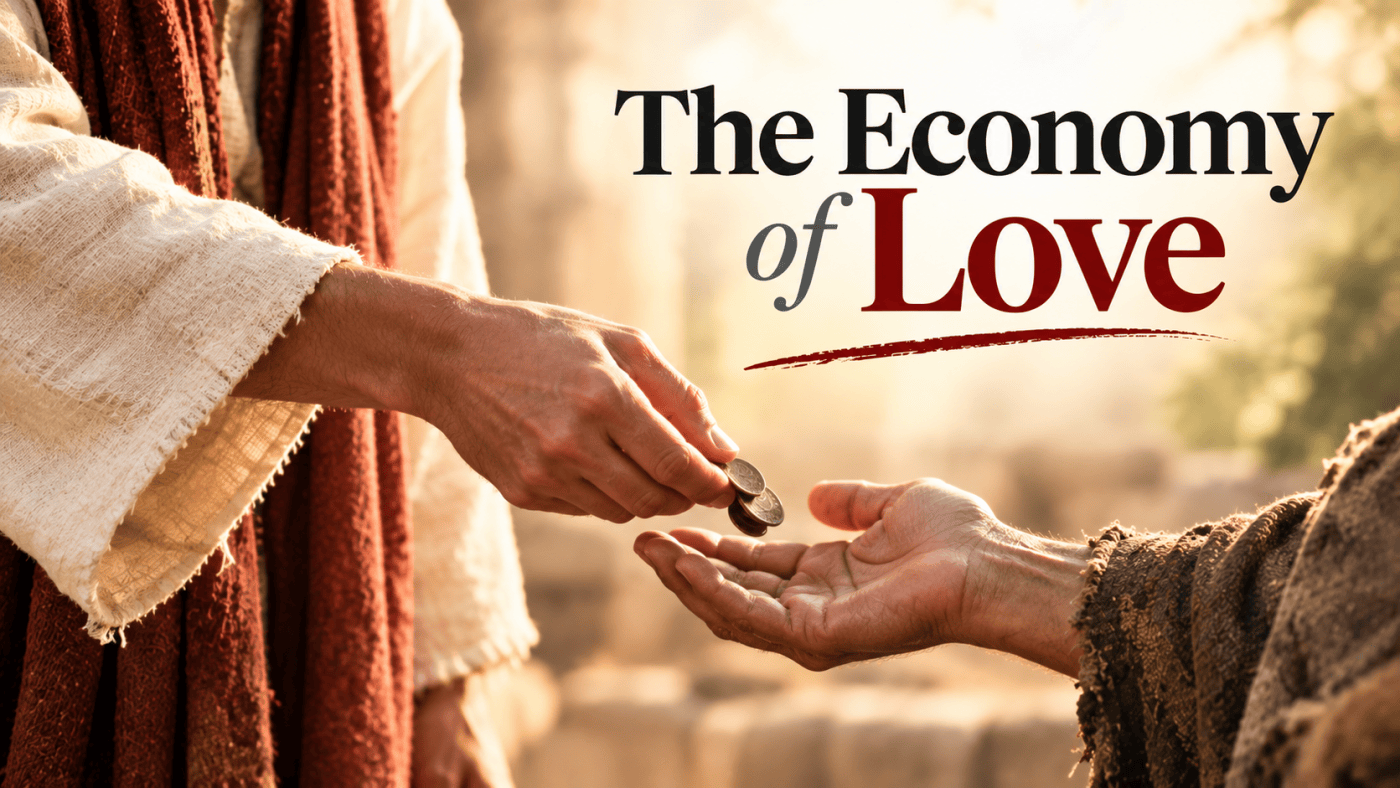
Is there any love in the church? Does the Spirit bring us together as partners? Is there affection and sympathy for one another? Well I hope the answer is yes otherwise why are we here? If these things are true of then it is because of Jesus and our calling to be like him. We are called to be like Jesus who though he was equal with God chose to become a slave. The contrast is starling, Jesus who has everything (equal to God), lays it all aside to take on the station (form) of a slave. A slave has nothing, a slave’s day is completely controlled by someone else, everything a slave makes belongs to someone else. Paul uses what we would call economic language throughout this passage. “Partners in the Spirit” is a reference to a business partnership, it means that we all share in the liabilities and profits of the business—the church. We are partners together but also to consider ourselves like slaves, individuals whose work entirely benefits someone else. And further, we are told that it is joy to participate in this lifestyle. Paul is talking about finding joy in taking on the liabilities of the church while sharing the benefits. This is exactly why Paul so often uses the family metaphors when writing to churches. When we hear the business metaphors used Christianity sounds deficient, who would want to join a business where you bear the burdens of giving while sharing the profit with others who might have given less? But in a family this is precisely what parents and grandparents do and they do it joyfully. Parents and grandparents give joyously to children, and they share joyously with each other. What Paul is trying to get us to realize is that we need to take that same mentality and apply it to the people we have chosen to join ourselves with.
This is what Paul means when he says we need to act in humility. He does not mean humble like we normally mean it, rather he means to do things that cannot possibly benefit us. Today we speak often of networking- a system where we invest in others hoping that one day that investment will pay us dividends. When Paul speaks of humility though, he is thinking of the work of a slave, work that provides for another person without paying dividends to ones self. And Paul is doing this by reminding us that this is precisely what Jesus did for us. In the words of Charles Wesley “[Jesus] emptied himself of all but love and bled for Adam’s helpless race.” Jesus gave up everything he was entitled to benefit us, he lowered himself to wash feet so that we can gain everything, and he challenges us to do the same for others.
This is the generosity that we are called to express in the world. Our great enemy is described as a dragon. In mythology the dragon collects whatever resources it wants and hoards them, sleeping day and night on its treasure. The dragon fiercely protects what it owns and shares nothing. Humans often act the same way, hoarding whatever we can and caring nothing for the plights of others. The church fathers labeled this mentality as theft. Christians have a long tradition of seeing the accumulating of wealth as stealing from those in need. This is because all of these possessions we claim as our own actually belong to God and meant to serve all humanity. When we hoard resources we are taking away from others what God meant for their good. Paul understood the importance of giving and taking care of others. This is why he connects Jesus’ work on earth to the language of business. Paul wants us to understand how seeing others as those we love, care for, and sympathize with impacts our use of resources and our giving. Passages like this tie our humanity to our work and resources and tie our humanity to our care for others. Jesus cared so much that he gave up equality with God to serve us in all ways, now it is our turn to demonstrate our love for our community by giving to one another.
[1] M. J. Edwards, ed., Galatians, Ephesians, Philippians, Ancient Christian Commentary on Scripture 234.


Leave a comment