
Scripture: Matthew 13:1–9, 18–23
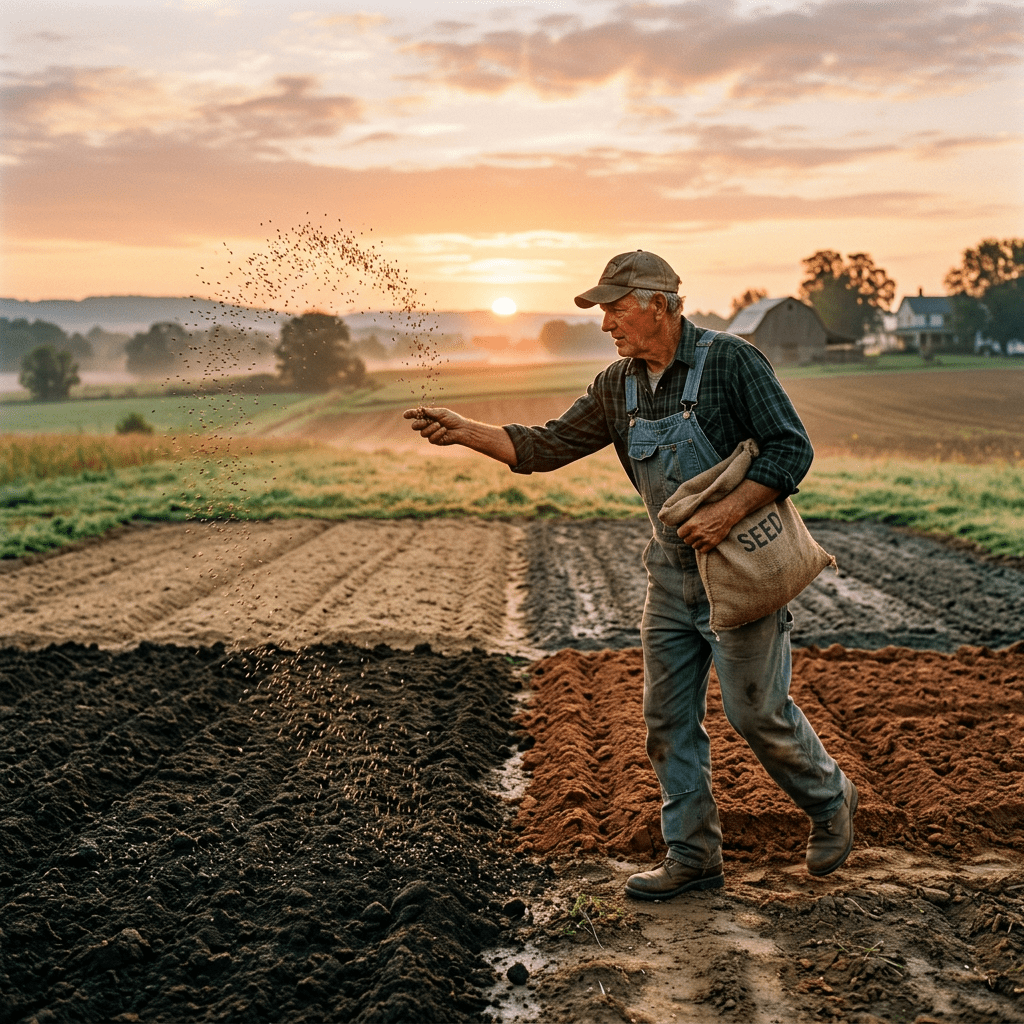
13 That same day Jesus went out of the house and sat beside the sea. 2 Such great crowds gathered around him that he got into a boat and sat there, while the whole crowd stood on the beach. 3 And he told them many things in parables, saying: “Listen! A sower went out to sow. 4 And as he sowed, some seeds fell on the path, and the birds came and ate them up. 5 Other seeds fell on rocky ground, where they did not have much soil, and they sprang up quickly, since they had no depth of soil. 6 But when the sun rose, they were scorched; and since they had no root, they withered away. 7 Other seeds fell among thorns, and the thorns grew up and choked them. 8 Other seeds fell on good soil and brought forth grain, some a hundredfold, some sixty, some thirty. 9 Let anyone with ears listen!”
18 “Hear then the parable of the sower. 19 When anyone hears the word of the kingdom and does not understand it, the evil one comes and snatches away what is sown in the heart; this is what was sown on the path. 20 As for what was sown on rocky ground, this is the one who hears the word and immediately receives it with joy; 21 yet such a person has no root, but endures only for a while, and when trouble or persecution arises on account of the word, that person immediately falls away. 22 As for what was sown among thorns, this is the one who hears the word, but the cares of the world and the lure of wealth choke the word, and it yields nothing. 23 But as for what was sown on good soil, this is the one who hears the word and understands it, who indeed bears fruit and yields, in one case a hundredfold, in another sixty, and in another thirty.”
Questions
- Does each type o soil represent a type of person only or can they represent different parts of one’s heart?
- Is it possible to change one’s heart to be more receptive or is Jesus describing and fixed mindset?
Background
Related Scriptures: Psalm 119; Ezekiel 36:26; Matthew 11:16-17
Chrysostom: But why would it be reasonable to sow among thorns or on rocks or on the pathway? With regard to the seeds and the earth it cannot sound very reasonable. But in the case of human souls and their instructions, it is praiseworthy and greatly to be honored. For the farmer might be laughed at for doing this, since it is impossible for a rock to bear fruit. It is not likely that the path will become anything but a path or the thorns anything but thorns. But with respect to the rational soul, this is not so predictable. For here there is such a thing as the rock changing and becoming rich land. Here it is possible that the wayside might no longer be trampled upon or lie open to all who pass by but that it may become a fertile field. In the case of the soul, the thorns may be destroyed and the seed enjoy full security. For had it been impossible, this sower would not have sown. And if the reversal did not take place in all, this is no fault of the sower but of the souls who are unwilling to be changed. He has done his part. If they betrayed what they received of him, he is blameless, the exhibitor of such love to humanity.[1]
Reflection
As I was reading Matthew 13 this week my mind went back to Matthew 11:16-17, “But to what will I compare this generation? It is like children sitting in the marketplaces and calling to one another, ‘We played the flute for you, and you did not dance; we wailed, and you did not mourn.’” What I noticed is the lengths to which the children and the farmer go to find engagement. The children first play festive music hoping the people would dance but then seeing the people do not respond to the invitation to dance they change their song. The children next play dirges because if the people do not want to dance surely, they are grieving, but the people would not mourn. They did not respond to either but went about their days without noticing the children. Likewise, the farmer does something we would not expect he gives seed to all of the types of soil regardless of preparedness. The farmer, like the children, provides everything he can in the hope that it will be received.
In both of these parables the one providing the message stands in for Jesus, he is the children and he is the farmer. He provides generously, calling for people to hear what he is saying and respond to his message. And in both of these parables, the opposite of hearing and accepting is not hatred, it is apathy. The people listening to the children did not force them to stop playing, they simply ignored it. The soil did not so much reject the seed as it was not prepared to receive it. I think these stories provide us with two lessons we should contemplate. The first is that when we are in Jesus’ position, sharing the message, we should share generously. The children wanted people to join the song and so they shared their song enthusiastically with everyone. Likewise, the farmer wanted a large harvest so he spread seed everywhere, hoping some would take. Conventional wisdom—especially for the farmer—would be that they were wasting effort, however, the point is that the one who spreads God’s message is to do so liberally. The person spreading God’s message is to try to reach people where they are hoping that they will hear the message and join in spreading it. We spread generously understanding that God may still be helping others to prepare the soil of their lives. We continue to spread the word because we understand that some are still removing stones or thrones that will make their hearts receptive. This process never stops in any person or in the world so we continue to spread the message generously hoping that people will hear the song and join. We hope they will relinquish their apathy and sing and dance with us.
The second lesson that we learn is about hearing the message. While it is tempting to understand the different types of soil in Jesus’ parable as different people, each represented in one soil type, it is also true that each of us can fail to hear Jesus’ message at different times. I may believe Jesus’ overall message but there may be places in my own heart and life where that message has not fully taken root. There may be places that I have not yet prepared to hear God’s message and so it does not grow in me. Just like I should continuously spread the message generously in the world because God is helping others prepare the soil of their own lives, I need to remember that God is still working with me to foster the kind of yield God desires. I think that when I am open to the idea that I may be apathetic in some areas and not allowing God’s message to change me, I can be more open to spreading the message because I see what is doing in me. The more I continuously look for areas of apathy and work to make them receptive to God the more I can spread the message to others, even when they are apathetic. Jesus wants us to continue to work on our hearts so that when his song tells us to celebrate and dance, we do, and when he grieves, we grieve. May we till the soil of our hearts so that we can spread the message generously to the rest of the world.
[1] Manlio Simonetti, ed., Matthew 1–13, Ancient Christian Commentary on Scripture 267.


Leave a Reply