Scripture: Matthew 14:22-33
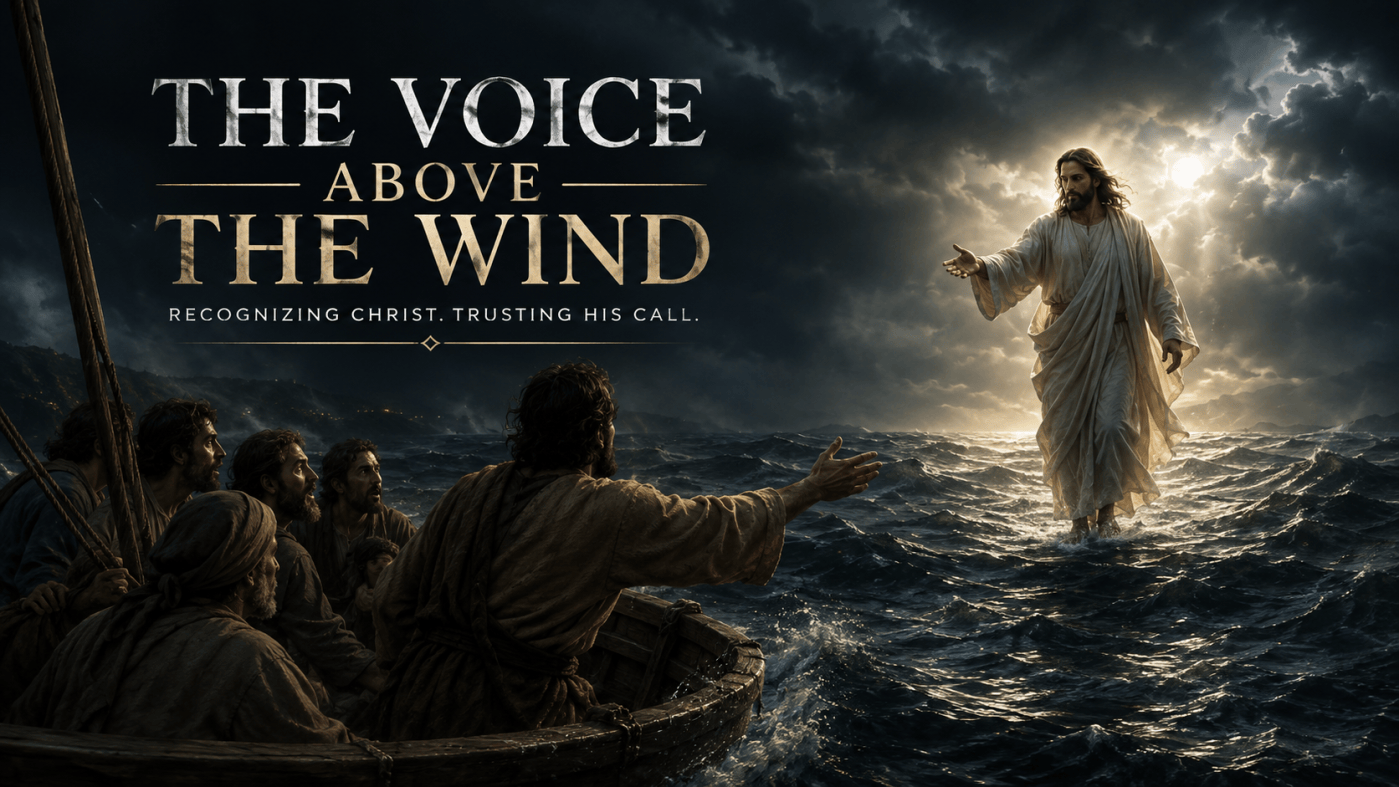
22 Right then, Jesus made the disciples get into the boat and go ahead to the other side of the lake while he dismissed the crowds. 23 When he sent them away, he went up onto a mountain by himself to pray. Evening came and he was alone. 24 Meanwhile, the boat, fighting a strong headwind, was being battered by the waves and was already far away from land. 25 Very early in the morning he came to his disciples, walking on the lake. 26 When the disciples saw him walking on the lake, they were terrified and said, “It’s a ghost!” They were so frightened they screamed.
27 Just then Jesus spoke to them, “Be encouraged! It’s me. Don’t be afraid.”
28 Peter replied, “Lord, if it’s you, order me to come to you on the water.”
29 And Jesus said, “Come.”
Then Peter got out of the boat and was walking on the water toward Jesus. 30 But when Peter saw the strong wind, he became frightened. As he began to sink, he shouted, “Lord, rescue me!”
31 Jesus immediately reached out and grabbed him, saying, “You man of weak faith! Why did you begin to have doubts?” 32 When they got into the boat, the wind settled down.
33 Then those in the boat worshipped Jesus and said, “You must be God’s Son!”
Questions
- What is the connection between Jesus staying alone all night praying and walking on water?
- How would you feel hearing “Do not be afraid” in the midst of a severe storm from someone standing on the sea?
Background
Related Scriptures: Genesis 1:1-2; Matthew 8:23-27; Romans 10:5-15
Jesus approaching “very early in the morning” is meant to help us visualize Jesus as the true dawn.
In the context the idea of a ghost is probably meant to be read as a demonic spirit disguised as Jesus. This meams the question Peter asks is meant to say “only Jesus can command me to do anything”.
Chromatius: Who was able to walk on the sea if not the Creator of the universe? He, indeed, about whom the Holy Spirit had spoken long ago through blessed Job: “Who alone stretched out the heavens and walked on the sea as well as the earth.” Solomon spoke about him in the person of Wisdom: “I dwelt in the highest places and my throne was in a pillar of cloud. I orbited the heavenly sphere alone and walked on the waves of the sea.” David likewise declared in his psalm: “God, your way was through the sea, your path through the great waters.” So too Habakkuk noted, “The raging waters swept on; the deep gave forth its voice.”
What is more evident than this testimony, what is more clear? It points to him walking on the water as well as on the ground. This is God’s only begotten Son, who long ago according to the will of the Father stretched out the heavens and at the time of Moses in a pillar of cloud showed the people a way to follow[1]
Reflection
When I hear the story of Jesus walking on the water, it is usually preached as a lesson about choosing faith over fear. The point is often that Jesus was challenging Peter to do something extraordinary—to step out of the boat despite his fears. There is certainly truth in that message. Many faithful preachers have proclaimed it, and many people have found courage through it.
But I think there is something more happening in the story.
The disciples’ greatest fear was not simply the crashing waves or the violent storm. They had already lived through one terrifying storm in which Jesus rebuked the wind and the sea (Matthew 8:23–27). They knew storms were dangerous, but this time they faced something even more frightening. Out on the water they saw what they believed to be a ghost or a demonic apparition approaching them through the darkness. Their terror was not merely of drowning; it was the fear that something evil had come for them.
When Peter says, “Lord, if it is you, order me to come to you on the water,” I do not think he is asking Jesus to give him a dramatic test of courage. Instead, Peter is testing the identity of the figure before him.
In effect, Peter is saying, “If you are really my Lord, then give me a command that only my Lord has the authority to give.”
Peter understands something important. Evil can deceive. It can imitate. It can manipulate appearances. But no evil spirit has the authority to command faithful obedience in the name of the Lord. If the figure truly is Jesus, Peter knows he can safely obey.
Notice that Peter does not climb over the side of the boat until Jesus gives the imperative: “Come.”
This is much like Lazarus in the tomb. Lazarus did not walk out on his own accord. He came out because Jesus called him. Likewise, Peter steps onto the water because he recognizes the voice of the One who has the authority to command him. Jesus is not forcing Peter to act against his will; he is inviting Peter into an act of trust that Peter freely chooses because he knows who has spoken.
That is why Peter’s failure is so tragic. His test succeeds. He discovers that the figure on the water truly is Jesus. He has every reason to trust. Yet after stepping onto the sea, he begins paying more attention to his surroundings than to the One who called him.
The irony is striking. The sea beneath Peter’s feet posed the greater danger, yet it was the wind that captured his attention. As one early Christian writer observed:
“The sea caused his dizziness, but the fear was caused by the wind. The sea was the greater threat, the wind the less. As Peter was struggling with the sea, he was on the point of suffering more anxiety from the violence of the wind. Such is human nature that we so often feel exposed to the lesser danger but experience it as the greater.”[2]
That observation feels remarkably familiar. Often the greatest danger in our lives is not what ultimately overwhelms us. Instead, we become consumed by the smaller things—the criticism of others, uncertain circumstances, financial worries, disappointing news, or the countless “what ifs” that swirl around us. We know Christ has called us, and we have good reason to trust Him, yet our attention shifts from His voice to the winds around us.
Perhaps the heart of this story is not simply, “Have enough faith to get out of the boat.” It is this: once you have recognized the voice of Christ, do not let the lesser fears of life drown out the One who called you in the first place.
[1] Manlio Simonetti, ed., Matthew 14-28, Ancient Christian Commentary on Scripture (12.
[2] John Chrysotom in Manlio Simonetti, ed., Matthew 14-28, ACCS 13.


Leave a Reply